
FAMES will be at the next edition of the European Forum for Electronic Components and Systems (EFECS 2026), from 2 to 4 December, 2026, in Helsinki, Finland. Hosted at the Messukeskus Helsinki Expo and Convention Centre, EFECS 2026 will bring together Europe’s semiconductor and ECS community around the theme: “Semiconductors at the crossroads: political power, industrial strategies, and economic growth.”
At this occasion, FAMES will contribute to the event through a dedicated workshop, a keynote and a booth:

FAMES Workshop – 4 December 2026 – from 9am to 11am
As part of the FAMES Annual Event, FAMES will host a dedicated workshop entitled “FAMES Pilot Line: From Technology Development to Pilot Line Opportunities.”
This workshop will present the FAMES pilot line’s latest progress across its five technological areas, highlight access opportunities (technologies, 2027 open call, FAMES Academy), and foster collaboration between FAMES partners and the Chips JU ecosystem.
Programme
Francine Papillon
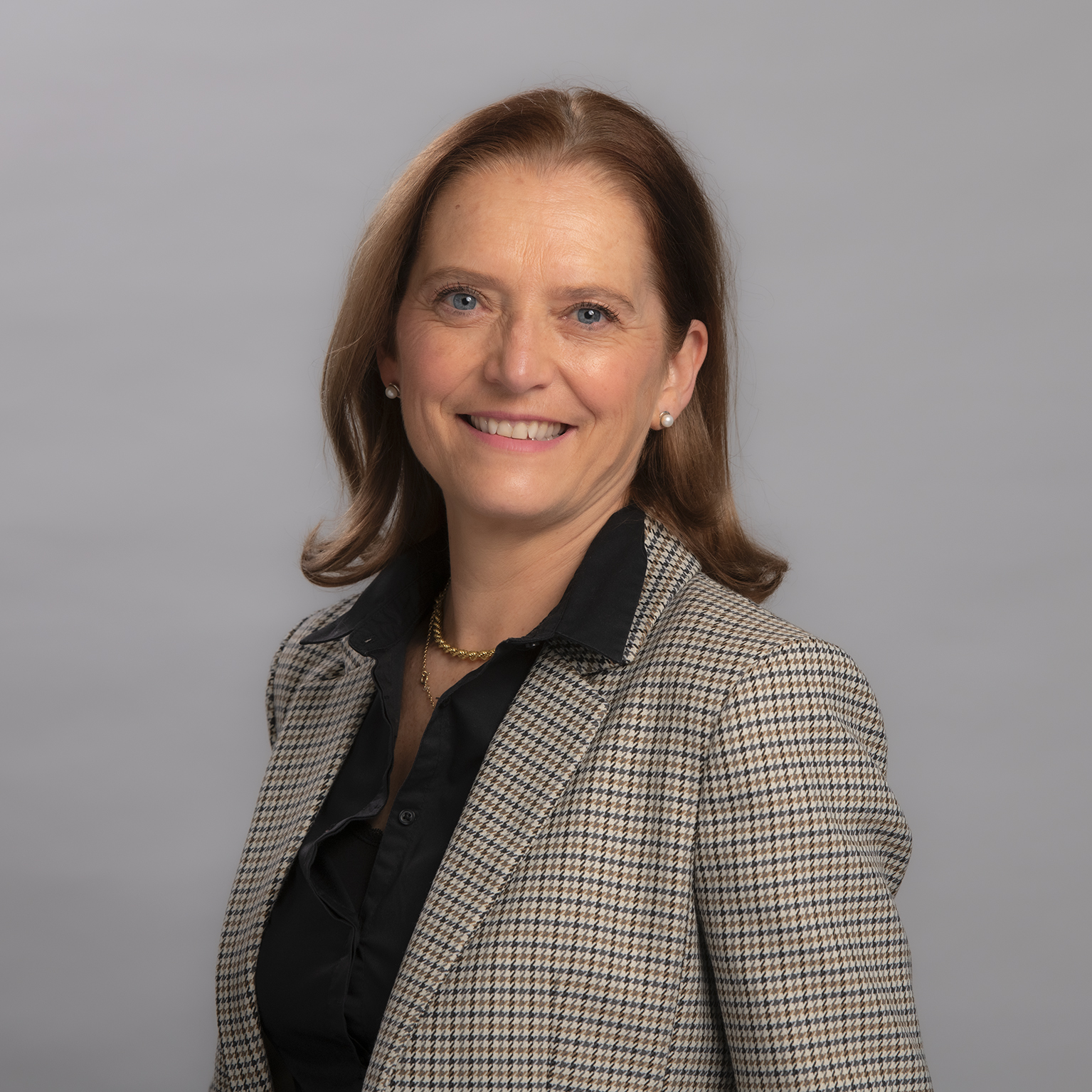
Francine Papillon is the Dissemination and Communication Lead of the FAMES Pilot Line at CEA-Leti. She is responsible for promoting the project’s scientific and technical achievements, highlighting the work of its researchers and partners, and disseminating R&D results to the European semiconductor community and relevant stakeholders.
She began her career in archaeometallurgy at the Musée du Louvre (Paris, France), before joining CEA Saclay and CEA Cadarache, where she worked on materials characterisation and corrosion studies for nuclear applications. From 2001 to 2008, she worked at Carnegie Mellon University (Pittsburgh, USA), serving as Associate Director of the Materials Research Science and Engineering Center (MRSEC).
After returning to France, she joined CEA Grenoble, where she held positions in education programme management at MINATEC before becoming Head of GIANT Innovation Campus Programmes. She contributed to the development of Grenoble’s research and innovation ecosystem, fostering collaboration between research organisations, European large-scale research infrastructures, universities, higher education institutions and industry, while coordinating the GIANT Executive Team.
She holds a PhD in Metallurgy and Materials Science from the University of Paris-Saclay and an Engineering Degree in Continuum Mechanics and Structures from École Polytechnique Féminine, France.
Dominique Noguet
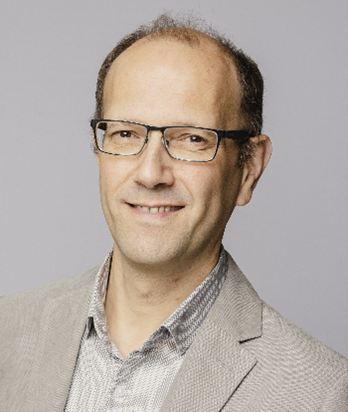
Dominique Noguet holds an engineering degree of the National Institute of Applied Sciences (INSA) in electrical engineering in 1992, and a PhD from National Polytechnical Institute of Grenoble (INPG) in 1998. Then, he held several positions at CEA-Leti as a digital IC designer, lab manager and department manager.
He led many projects at a national level and in several European frameworks (FP5, FP6, FP7). In January 2023, he was appointed project manager for the France 2030 flagship project NextGen. He is currently the coordinator of the FAMES Pilot Line and reports to CEA-Leti’s CEO. Dominique is a CEA senior expert and an IEEE Senior Member. He has authored or co-authored ~100 scientific papers (several best paper awards), several book chapters and 15 patents. He was a reviewer and a member of scientific committees of many conferences and a member of journal editorial boards. He was conference chair and TPC chair of several international conferences.
Valeriya Kilchytska
 Valeriya Kilchytska is Senior Researcher, Logistic Director assuring scientific lead of the WELCOME Electrical Characterization Platform at UCLouvain. She received her PhD degree in semiconductor and dielectric physics from Taras Shevchenko National University of Kyiv, Ukraine in 1997. Her PhD work is on the electrical and radiation properties of Silicon-on-Insulator (SOI) structures. Then she worked at Kyiv Institute of Semiconductor Physics on the bias-temperature processes in SOI. In 2001, she was a visiting researcher at the Chalmers University of Technology, Sweden, for characterization of SiC MOS structures. She joined UCLouvain in 2002. She has a long-term experience in characterization, simulation and modelling of advanced devices with a focus on wide frequency band and noise characterization, performance assessment as well as cryogenic, high-temperature and radiation behavior. She has authored or co-authored > 300 scientific papers and conference contributions. She is a reviewer for numerous scientific journals and a TPC member of several conferences. Since 2023, she is a Deputy Director of SINANO Institute.
Piotr Wiśniewski
 Piotr Wiśniewski, Ph.D. Eng., is a Head of Intelligent Semiconductor Systems Division (SEMINSYS), Centre for Advanced Materials and Technologies CEZAMAT, Warsaw University of Technology. He received his MSc. Eng. degree in microelectronics, photonics, and nanotechnology, and a Ph.D. degree in electrical engineering from Warsaw University of Technology (WUT). Currently is the Head of the Intelligent Semiconductor Systems Department (SEMINSYS) and an assistant professor at the Centre for Advanced Materials and Technologies CEZAMAT WUT, responsible for managing the semiconductor technology line and R&D activities of the department. His research interests and expertise cover physics, modeling, and technology of semiconductor devices for micro / nano-electronics and photonics. He has been actively involved in national and international projects as a principal investigator or researcher, supported by various research agencies
Shraddha Choudhary
 Shraddha Choudhary is a Senior Research Engineer at Silicon Austria Labs (SAL), where she works on self-biased circulators within the FAMES Pilot Line project. She holds a PhD in RF and Microwaves from the Indian Institute of Technology (IIT) Jodhpur, India. In 2021, she joined the Tata Institute of Fundamental Research (TIFR) in Mumbai as a postdoctoral fellow, developing thin-film processes for magneto-optical and photonic devices and contributing to the characterization of next-generation semiconductor materials. She then moved to the University of Münster, Germany, where she led nanofabrication process development and achieved high-precision lithography for advanced spintronic devices. Her expertise spans cleanroom processing, device characterization and electromagnetic design
Tuomas Pensala
 Tuomas Pensala D. Sc. (Tech.) received the M. Sc. degree in Engineering Physics from the Helsinki University of Technology in 2000 and the D. Sc. (Tech.) degree in Applied Physics from the Aalto University in 2011. He has worked for the VTT Technical Research Centre of Finland since 1998 where he presently holds a position of Research Team Leader of the RF Microsystems team. His research interests include RF devices based on thin film technology such as GHz range BAW/FBAR resonators and filters and IPD. He has also worked on piezoelectric MEMS sensors and timing devices. He has authored and co-authored more than 50 scientific journal and conference papers on thin film, RF and MEMS devices and contributed to almost 30 patent families.
Sambuddha Khan
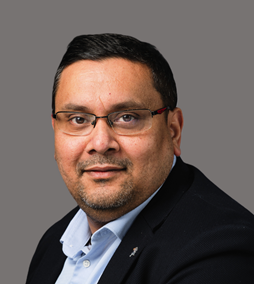 Dr Sambuddha Khan is a Senior Scientist and Technical Lead at Tyndall National Institute, Ireland, where his research focuses on the design, fabrication, and heterogeneous integration of MEMS and micro-components, including integrated magnetics, piezoelectric transformers, and AlScN-based RF acoustic resonators for power-supply-on-chip applications. He serves as Programme Manager for Tyndall’s participation in the Chips JU FAMES Pilot Line project and has led research programmes funded by Horizon Europe, Research Ireland, and Enterprise Ireland. Before joining Tyndall, he was a postdoctoral researcher at the University of California, Irvine, working on a DARPA-funded programme on inertial-grade silicon MEMS gyroscopes. Dr Khan received his PhD from the Indian Institute of Science, Bengaluru, in 2014, and lectures at University College Cork on MEMS and microfabrication.
Laurent Pain
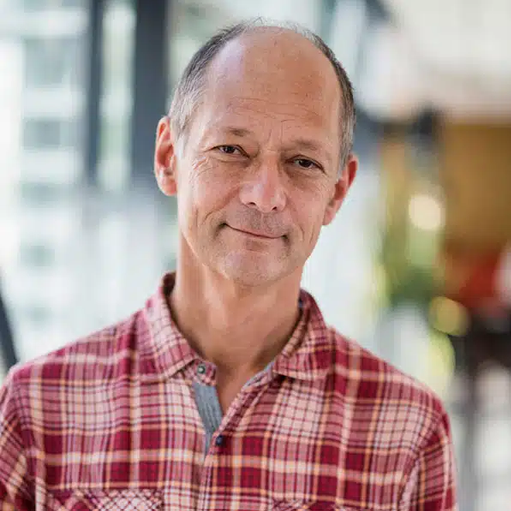 Laurent Pain is graduated from Grenoble INP – PHELMA engineering school in 1992. He received his Ph D after his work on DUV resists study. He joined CEA-Leti in 1996 to work on infra-red technology, and then moved to STmicroelectronics in 1999 working on 193nm and e-beam lithography technologies. From 2008 to 2014, Laurent leaded the lithography laboratory of the silicon technology division of CEA-Leti. In July 2014, within the CEA-Leti Silicon Technology Division, he was in charge of the business and the partnerships developments of the Silicon Technologies Platform Division. Since Sept 2023, he is took the position of Sustainable Electronic Program Director with the mission to build and consolidate the strategy and programs of CEA6Leti in the field of evo-innovation and sustainability.
Laurent Fesquet
 Laurent FESQUET received the Ph.D. degree in electrical engineering from
Paul Sabatier University, Toulouse, France, in 1997. In 1999, he joined the Grenoble Institute of Technology, Grenoble, France, as an Associate Professor at ENSERG (now PHELMA).
His current research at the TIMA Laboratory today covers asynchronous circuit design, computer-aided design (CAD) for event-based systems and non uniform signal processing. He has served as general and program chair of several international conferences. He is currently the Deputy Director of the TIMA laboratory and CIME Nanotech, an academic center supporting microelectronic teaching and research activities
Susana Bonnetier
 Susana Bonnetier is a member of the FAMES Pilot Line management team and leads the Open Access effort since 2024. She is an MIT engineer with a background in industry and research in the USA and France. She worked for Freescale Semiconductor as R&D Engineer and contributed to the successful development of the 65nm and 45nm CMOS technology nodes within the Crolles 2 Alliance. Susana then joined CEA-Leti as head of a joint laboratory with a major French optics company, and later led CEA-Leti’s Carnot R&D program for 10 years, managing a 14M€/year budget. During that time, she was VP of the French Carnot Network and a member of its board of directors.


